
In the fast-paced world of social media, timing isn’t just everything—it’s the only thing. You could craft the most compelling ad copy, pair it with stunning visuals, and still see it vanish into the digital abyss if you post at the wrong moment. Understanding the best times to post on social media is the secret weapon that separates viral campaigns from invisible ones.
Why Timing Matters More Than Ever
With algorithm-driven feeds prioritizing recent and engaging content, your post’s initial performance in the first few hours often determines its ultimate reach. Post when your audience is most active, and you boost visibility, engagement, and conversion potential. Get it wrong, and even brilliant content can get lost in the scroll.
While “best times” can vary by industry, niche, and your specific audience, global data analysis reveals powerful patterns. Here’s your research-backed guide to social media post timing across major platforms.
The Global Clock: Platform-by-Platform Breakdown
1. Facebook: Mid-Week Mornings & Afternoons
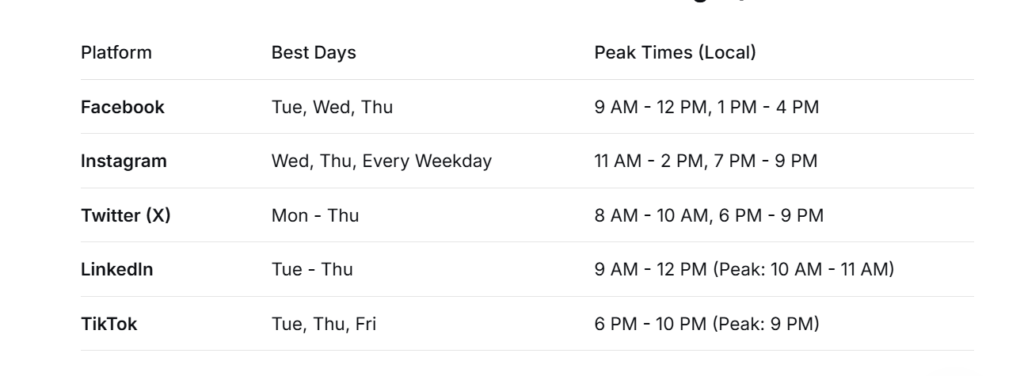
Best Days: Tuesday, Wednesday, and Thursday.
Peak Times: 9 AM to 12 PM, and 1 PM to 4 PM local time.
Why: These windows catch people during work breaks and midday scrolling sessions. Avoid weekends and late nights when competition from personal content is high.
2. Instagram: Consistency is Key
Best Days: Every weekday, with a slight edge to Wednesday and Thursday.
Peak Times: 11 AM to 2 PM, and surprisingly, 7 PM to 9 PM local time.
Insight: The evening surge reflects “wind-down” scrolling. For Reels, late afternoon (3 PM – 4 PM) often sees high discovery rates. Use Instagram Insights to track when your followers are online.
3. Twitter (X): The Real-Time Conversation Hub
Best Days: Monday through Thursday.
Peak Times: 8 AM to 10 AM, and 6 PM to 9 PM local time.
Logic: Mornings catch commuters and people checking news. Evenings are for commentary on the day’s events. Timeliness trumps all here—align posts with live events, trends, and breaking news.
4. LinkedIn: The Professional Pulse
Best Days: Tuesday through Thursday.
Peak Times: 9 AM to 12 PM, specifically 10 AM to 11 AM local time.
Strategy: Post during the professional “work window.” Avoid weekends. Early morning (7-8 AM) can also work for catching professionals planning their day.
5. TikTok: Evening Entertainment
Best Days: Tuesday, Thursday, and Friday.
Peak Times: 6 PM to 10 PM, with a peak at 9 PM local time.
Note: The “For You” page has a longer shelf-life, but posting when users are relaxing at home increases initial engagement, boosting algorithmic favor.
Beyond the Clock: The 4 Golden Rules of Timing
Know Thy Audience: A B2B tech brand and a gaming company have different active hours. Use native analytics on each platform (like Facebook Audience Insights or Twitter Analytics) to find your audience’s specific “active hours.” This data beats any generic guide.
Consider Time Zones: For a global audience, don’t just post at 9 AM your time. Either:
Target the Majority: Schedule posts for the peak time in your largest demographic zone.
Stagger Posts: Use scheduling tools (like Buffer, Hootsuite, or Later) to publish the same ad multiple times, targeting peak windows in North America, Europe, and Asia on the same day.
Align Content with Context: A “Monday Motivation” post makes sense on Monday morning. A complex article is better suited for Tuesday midday, not Friday evening. Match your content’s intent with the user’s likely mindset.
Test, Analyze, Repeat: Run experiments. Post the same type of content at different times for two weeks. Compare the engagement rates, click-throughs, and conversions. Let your own performance data be the ultimate guide.
The Quick-Reference Cheat Sheet (Global Averages)
Your Action Plan
Audit: Check your analytics for the next 30 minutes. Note your top 3 posts from last month and their posting times.
Schedule: Using the guide above, plan your content calendar for next week, aligning posts with recommended windows.
Experiment: Pick one platform and test two different time slots for similar content.
Automate: Invest in a social media scheduler to maintain consistency without being online 24/7.